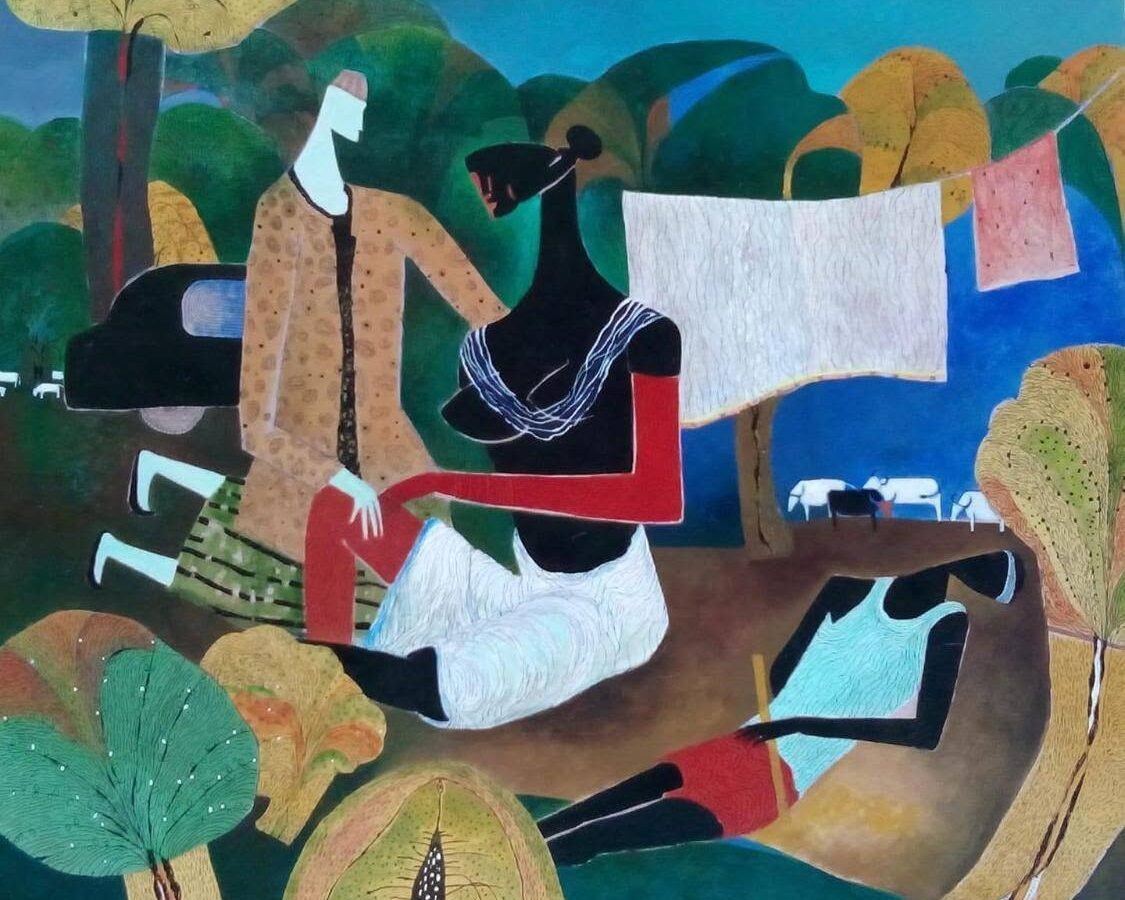
Strokes in meditation with Haren Thakur

The unblemished, ingenuous fervors of Jharkhand, with its extensive, weathered terrain of rolling hills, along with dense, tropical, deciduous-forest-intersected valleys, and most importantly the inaugural folks of this rusty soil—are the crux of Haren Thakur’s art space.
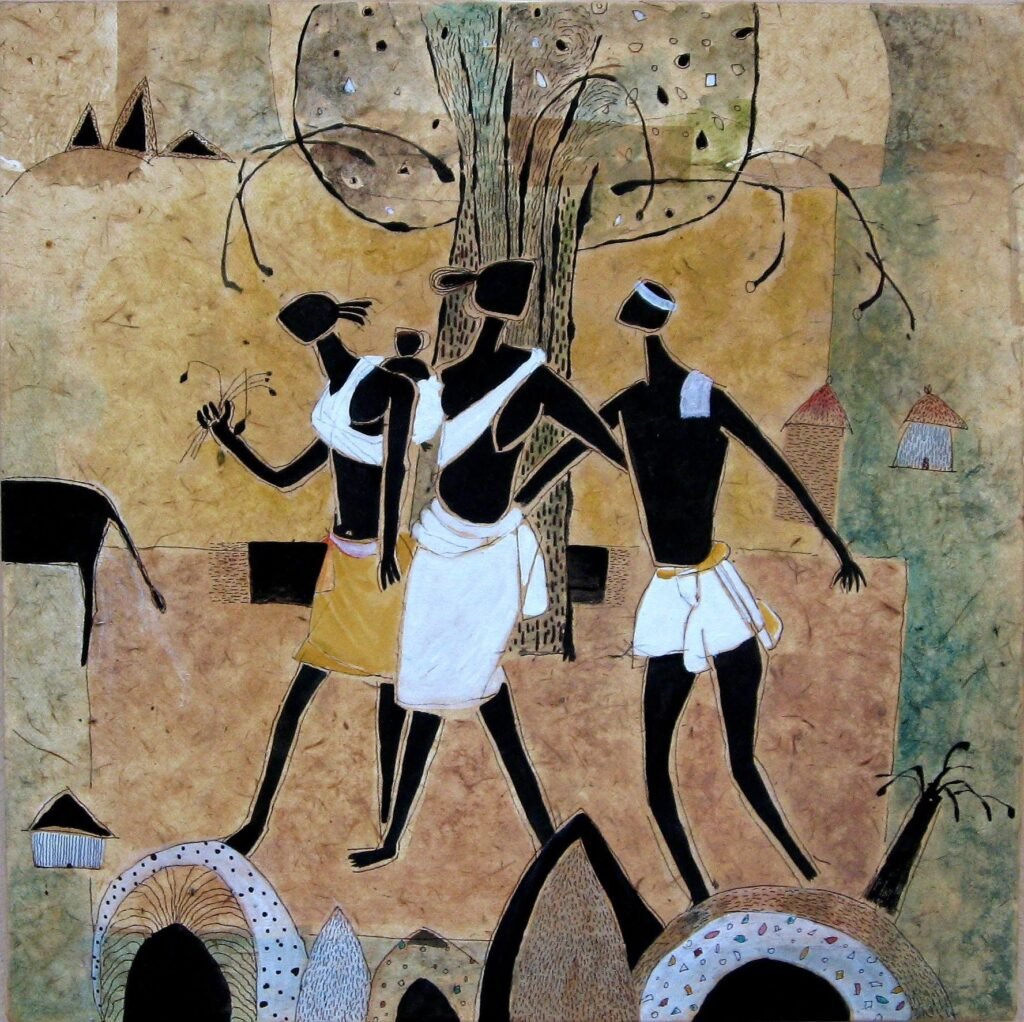
His compositions enunciate an ingenious dialogue between the high abstract expressionism of the New York School and the contextual modernism of Santiniketan. A compressed, flattened perspective with vertically stacked elements, resembling the scroll painting technique of traditional folk art, Patachitra, is central to his narrative arc, yet without the obsessive need to fill the negative spaces in between.
The Palette and Rhythm in Haren Thakur’s Art
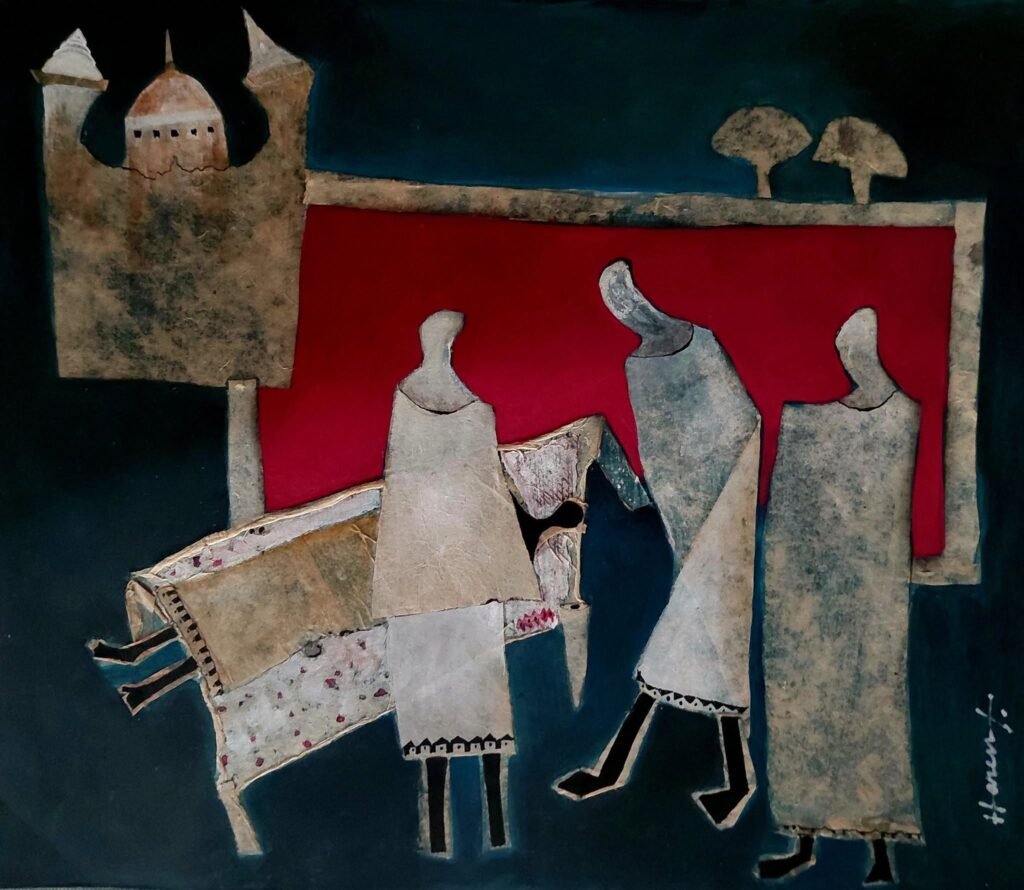
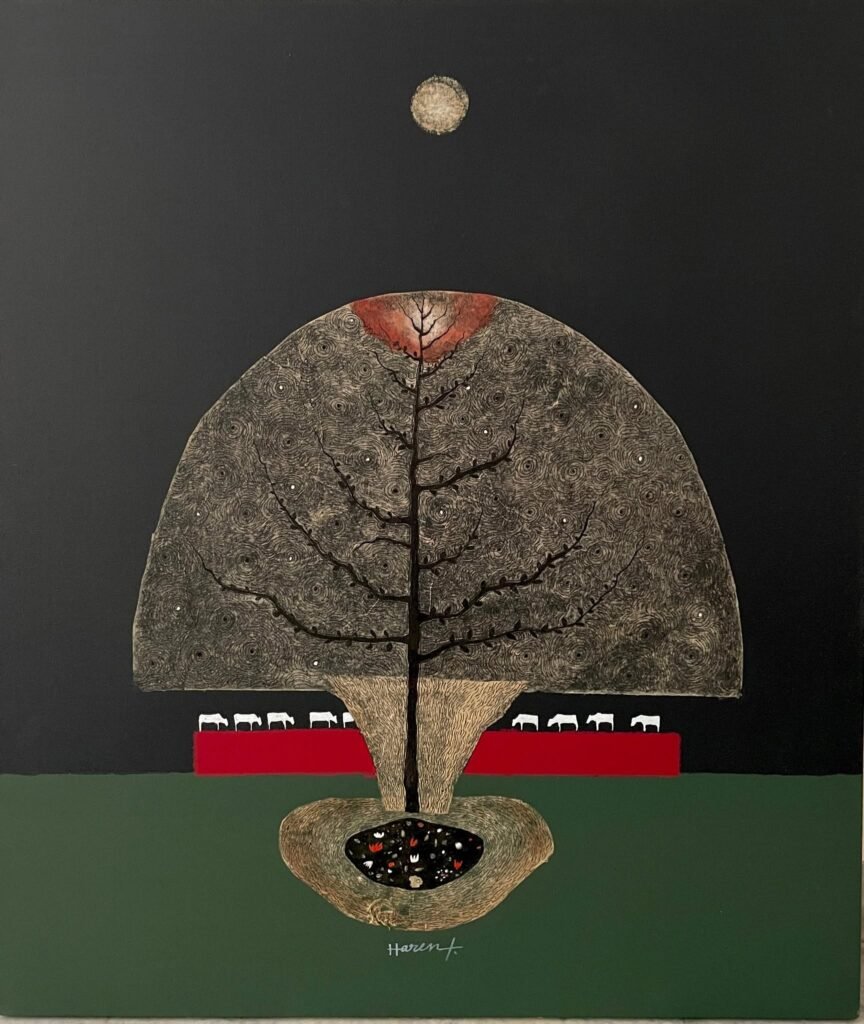
Lack of vibrancy is a distinct characteristic of his creative tone, as a muted earthy palette of dull grey, blue, yellow, and ochre seldom accentuated with pastel tones of variegated greens serves as the backdrop to his compositional figures, reiterating the unfiltered vision of his dust-laden homeland. Thakur’s series of exponent line works breathes life into inanimate objects as well as plain silhouettes of his faceless muses. Disproportionate, angular figures subjugate his visual landscape, as his choice of visual expression exhibits a deliberate retraction from the expected. The rhythmic contours of willowy, elongated limbs swaying with unhurried urgency are one of the signature components of his figurative oeuvre. His metaphoric parochial sagas build upon agrarian folk tales, wrapped in layers of rice paper decoupage. His muses are inseparable from what surrounds them, and the simple linework merely delineates the essence of their uncomplex existence.
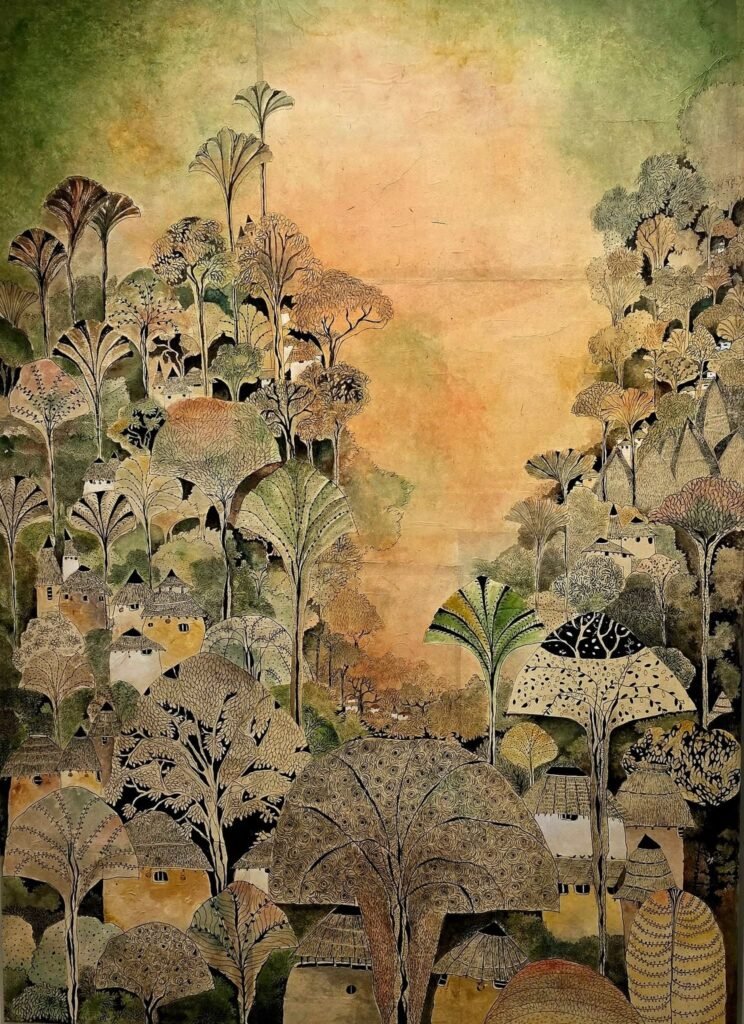
The pastoral compositions in Thakur’s panoramic canvas vibrate with numinous sensations, as the abstraction in his artworks is nothing but an extension of the intangible. Artworks like “Eternal Peace,” “Balanced Nature,” etc. explore the spiritual significance of life as we speak of it. It is an outside-looking-in approach to the act of being. Both of these artworks suspend the figures and elements in spectral dimensions, in resonance with fragments of space and time that repeat themselves over and over again. Where one realizes profound peace in demise, swathed in the vermilion bosom of Mother Earth, the other sprouts and burgeons from that same cradle, exposing the eternal structure of equipoise.
About The Author
